I had an opportunity to visit the National World War I Museum and Memorial in Kansas City, Missouri, last week. It houses the most extensive collection of artifacts from the Great War in the world. I have previously written about family who served in The Great War in both the Army and the Navy.
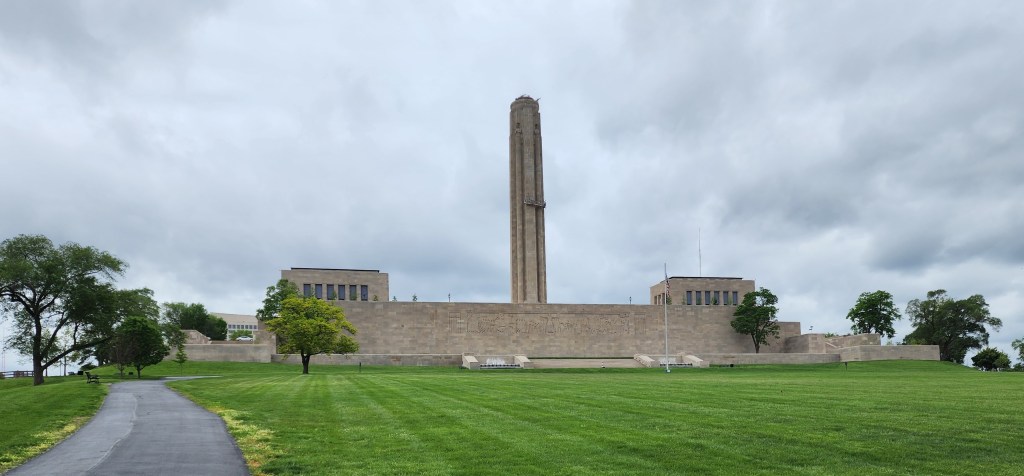
I wandered through the exhibit halls and movie theaters detailing the causes, campaigns, and carnage of the “War to End All Wars.”I have read and studied this conflict as an undergraduate and, later, as a student at the Naval War College while on active duty. Walking around the building and experiencing the sights, sounds, and objects curated therein helped deepen my understanding of this war and reignited my interest in learning more.
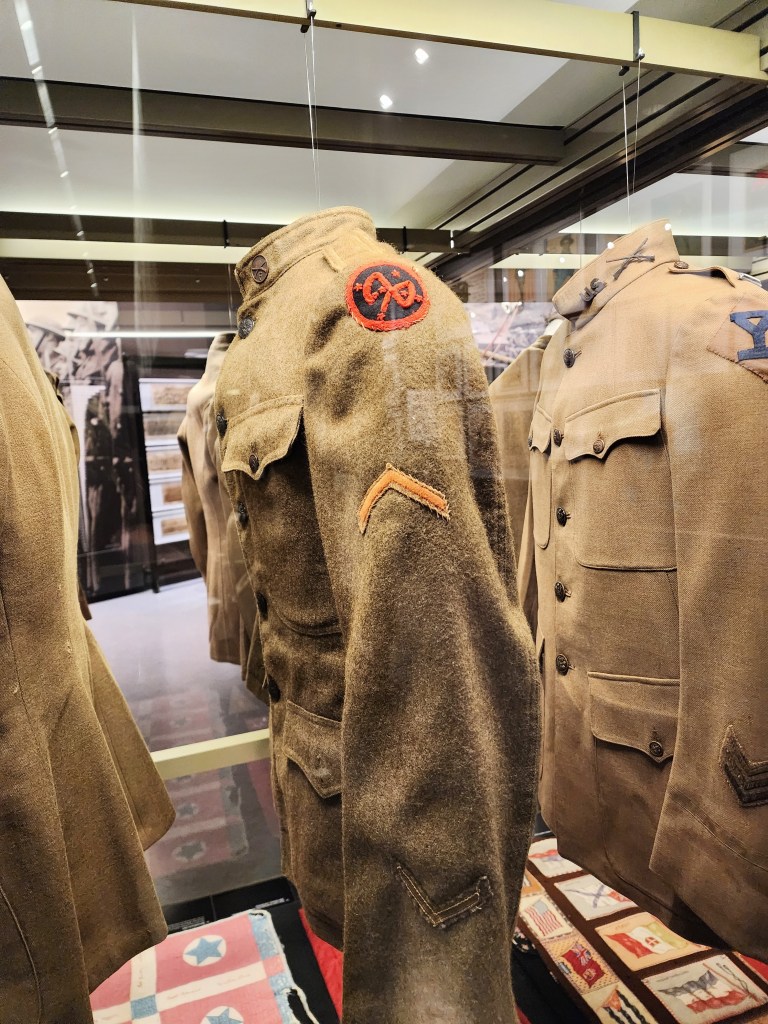
There is a collection of U.S. Army uniforms in the main gallery that caught my eye. As I studied the collection, I found a uniform with the 27th Infantry Division Patch on the left shoulder. My great-uncle, PVT Thomas Kelly of Company G, 106th Infantry Regiment, 53rd Infantry Brigade, 27th Infantry Division, 2nd Corps of the United States Army, would have worn a similar uniform deploying with the American Expeditionary Force (AEF) in 1918.
The exhibit that made me stop in my tracks was a series of envelopes in frames along the wall of the Ellis Gallery on the lowest level of the museum. These were the envelopes that carried news from home to a soldier from Stuebenville, Ohio. PVT Walter L. Myers received letters from his father, John Ross Myers, during basic training in San Antonio, Texas, advanced training in Morrison, Virginia, and finally with the AEF in France in 1918-1919.
We are living in a time where communication is instantaneous. Texts, emails, and social media connect us immediately with anyone, anywhere in the world. As a society, we have only had this technology for around 30 years. Before then, we wrote letters and mailed them. It could take a few days for a letter to get across town or within the state. For a deployed service personnel, a letter could take weeks or months to reach the intended recipient. I can tell you from personal experience that nothing will bolster morale for a service member more than a letter or package from home. Nothing undermines morale more than being the soldier, sailor, airman, or Marine who is empty-handed at the end of mail call.
PVT Myers was assigned to the Army Signal Corps because of his expertise as a wireless operator, and his experience painting in the family business qualified him as a camouflage painter.
What follows is a sampling of the envelopes from father to son. In a time when mail was hand-cancelled and sorted, I am sure every person who handled this correspondence paused to admire each work of art, each labor of love.
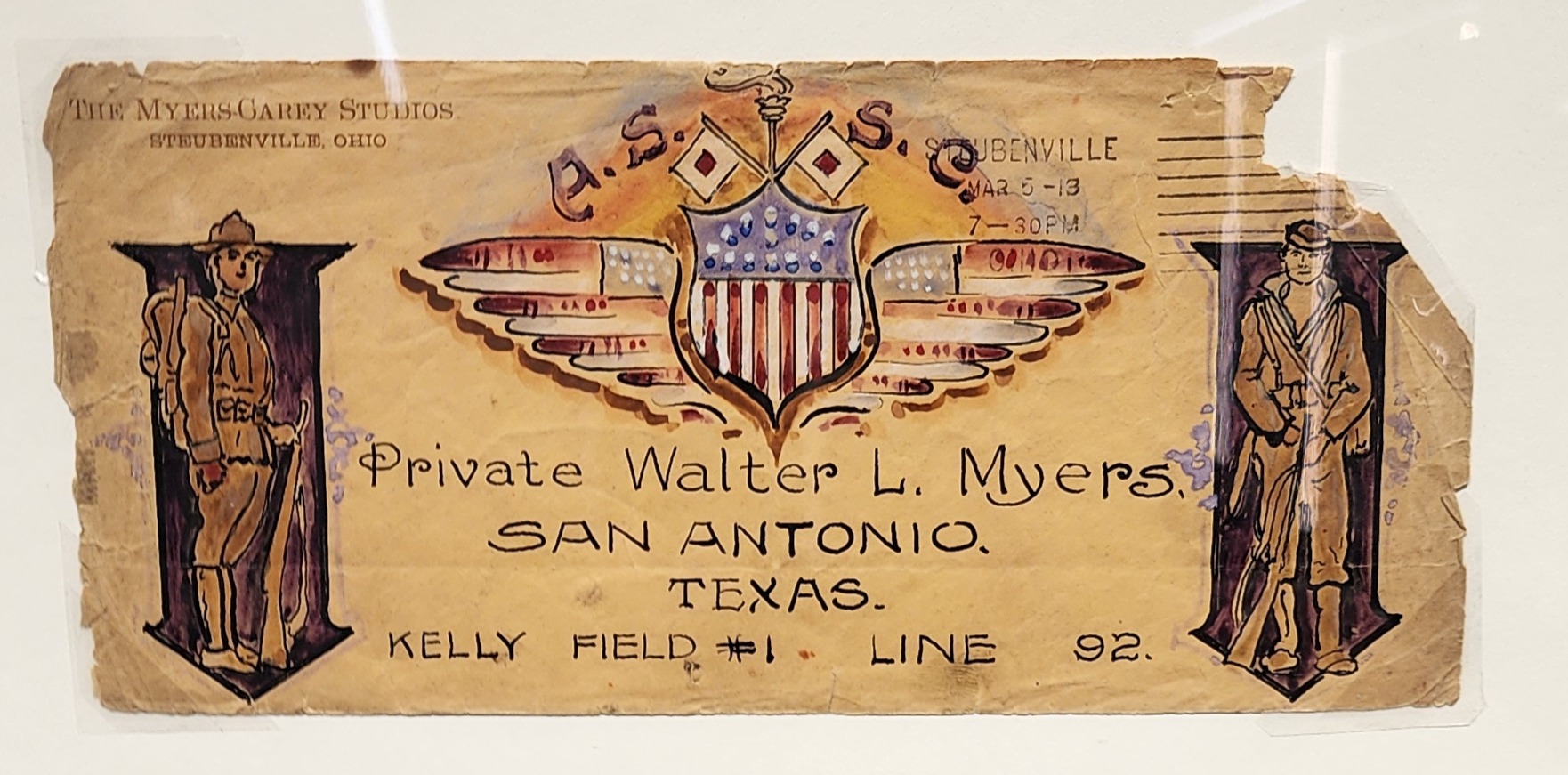
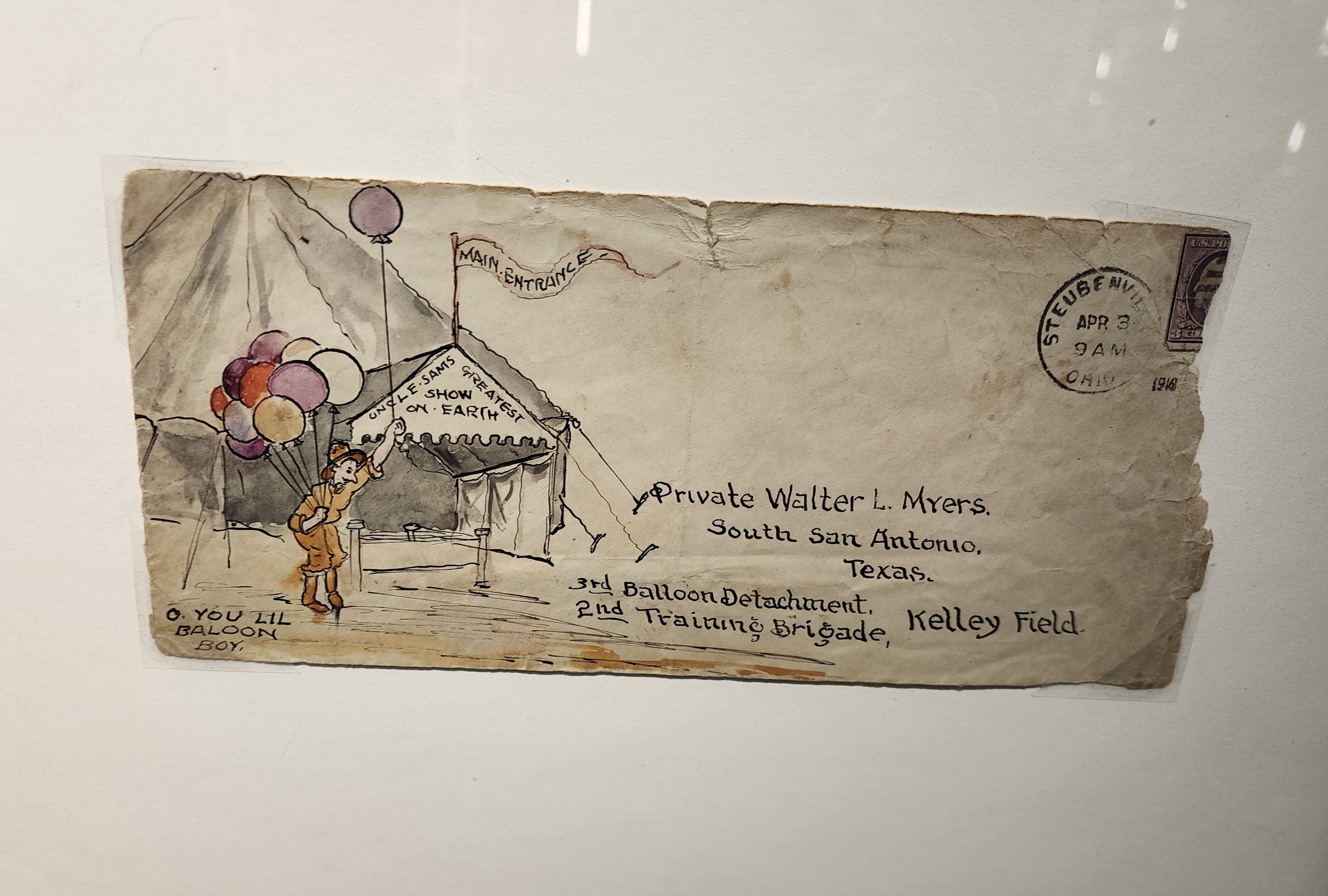
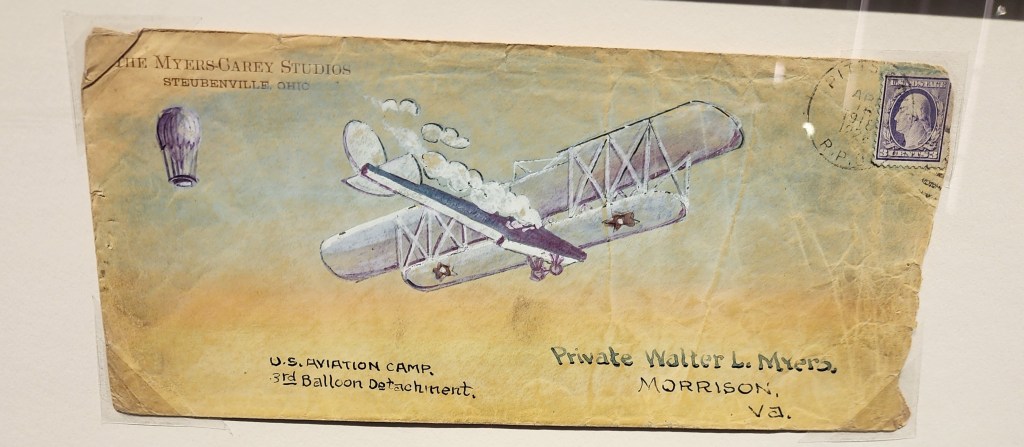
As you can see, these envelopes were lovingly decorated by a father who ran a business in Steubenville, painting scenes, sets, frescos, and murals. The standard format for addressing mail was sometimes set aside to complete the drawing on the business-size envelopes from the family’s business, The Myers-Carey Studio.


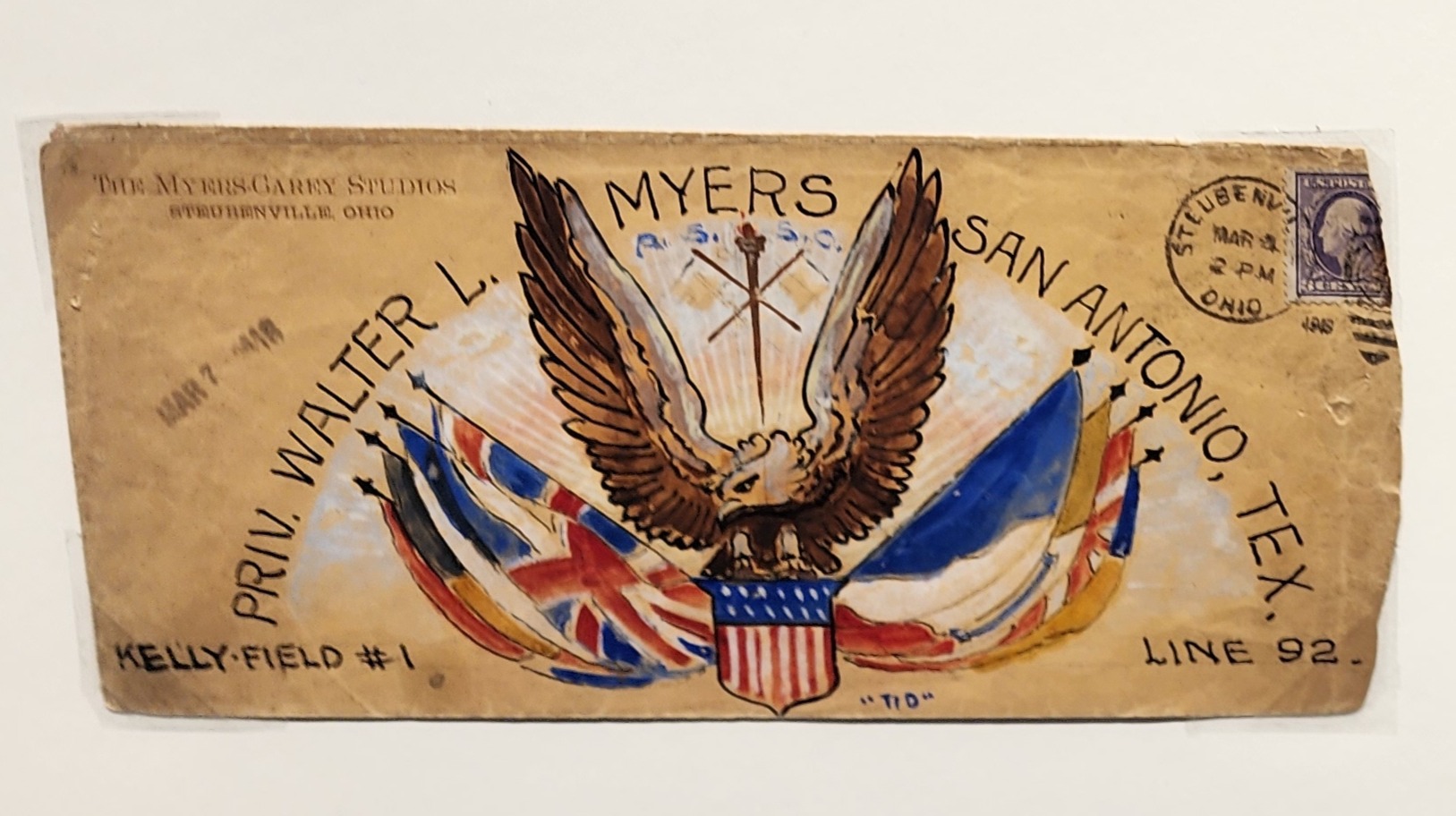
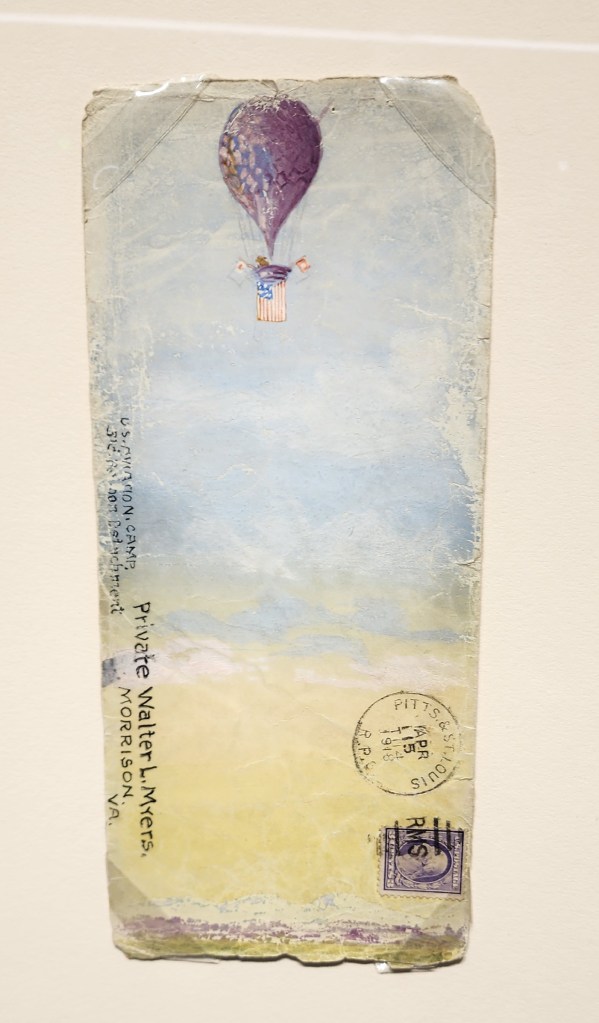
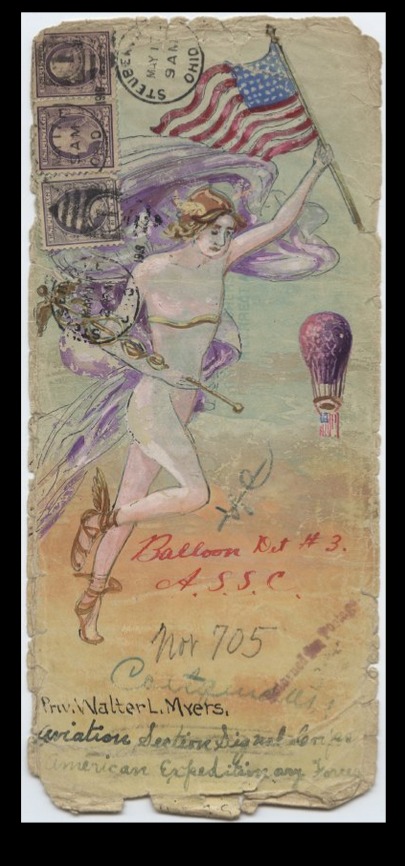
In the fall of 1918, Walter wrote home, “DONT-USE-ANY-DECORATED-ENVELOPES
I think somebody swipes ’em”. I can understand the concern. In his letters, beginning in basic training in Texas, he laments that people were asking for the envelopes.
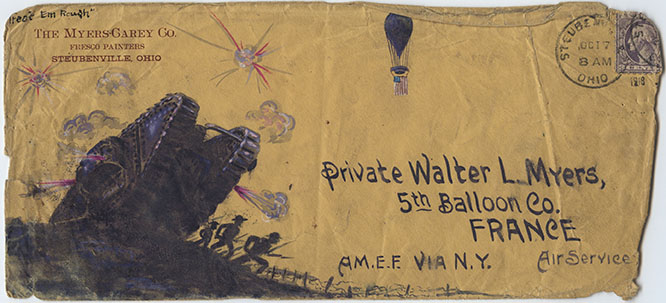
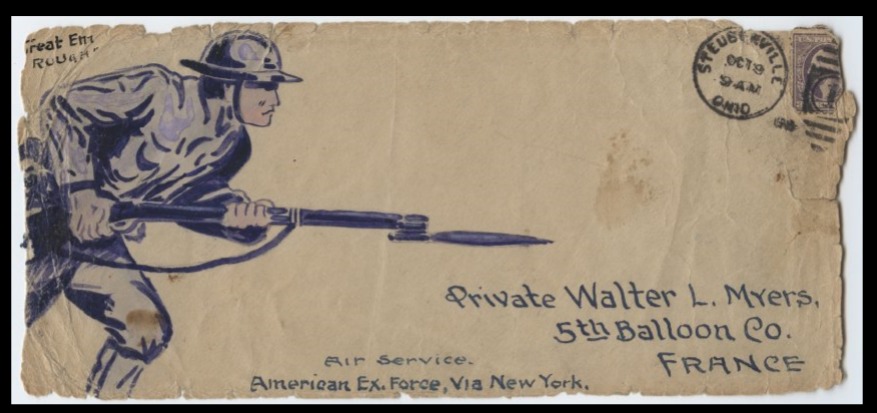
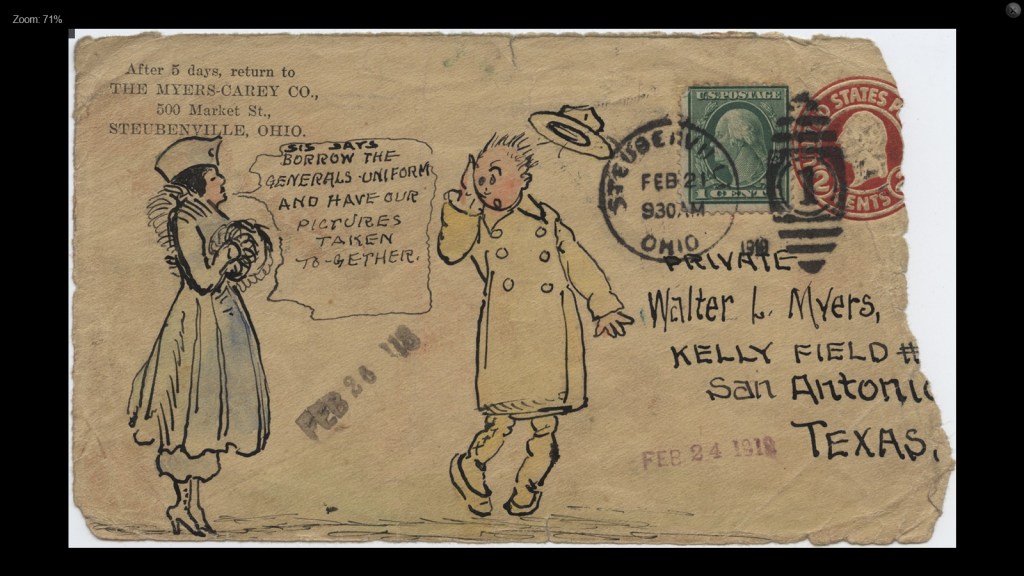
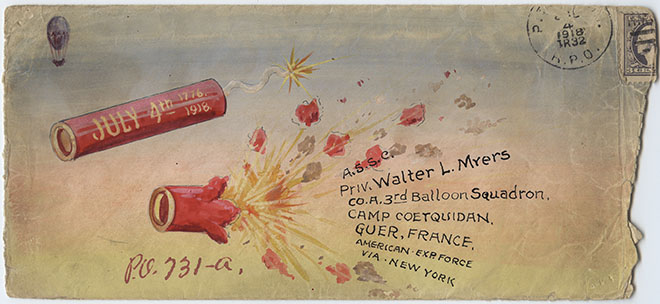
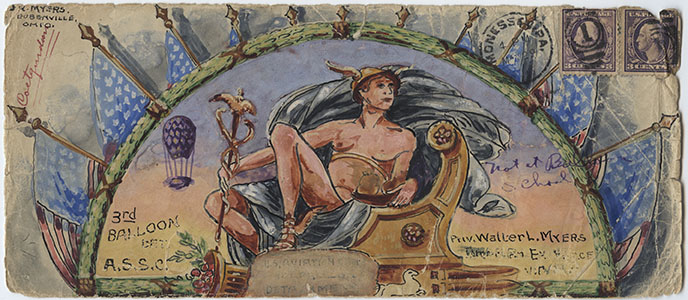
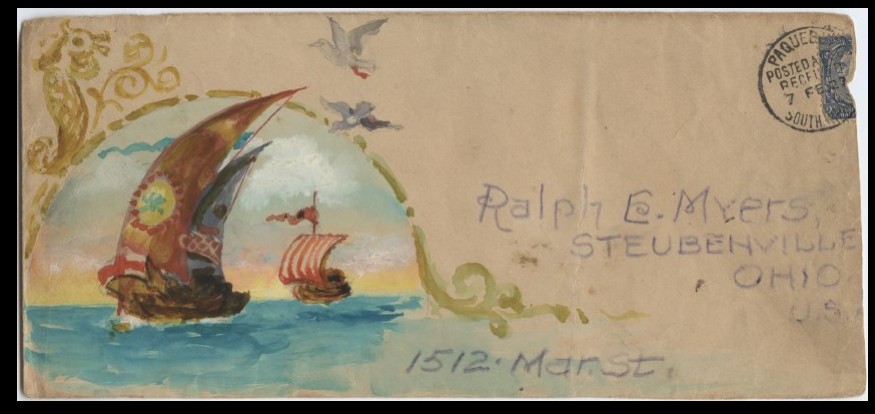
PVT Myers survived the war, keeping all of the letters from home. Remarkably, the envelopes survive to tell a human story within a global conflict. Private Myers’s daughter, Nancy Mae (Myers) Hopkins, compiled the collection in a book titled “Mail Call: Hand Painted Envelopes From Father to Son During World War 1“. The book was released in 2022. Mrs Hopkins passed away just days before her 93rd birthday in January 2025.
An exhibit of a sampling of the envelopes is on display in the Ellis Gallery at the National WWI Museum and Memorial in Kansas City, Missouri.

 Michael's Monologue
Wow! What an extraordinary experience, to see these letters. I remember well, from my Desert Storm days, how important mail call was. Looking forward each time to hear from family and friends. I also saved all my letters from then. They mean a lot to me.
Thanks!
LikeLike